We are part of the Amazon affiliate program. Affiliate links may be used in this post.
My basement has never had an obvious leak. There were no puddles on the floor, dripping pipes, or large water stains spreading across the walls. But every time I walked downstairs, I was hit with that damp, musty basement smell.
Since the basement is finished and frequently used, I knew the musty smell had to go. It took some experimenting, but I was able to completely freshen up the space. Here’s what actually worked.
I Started Running Two Dehumidifiers
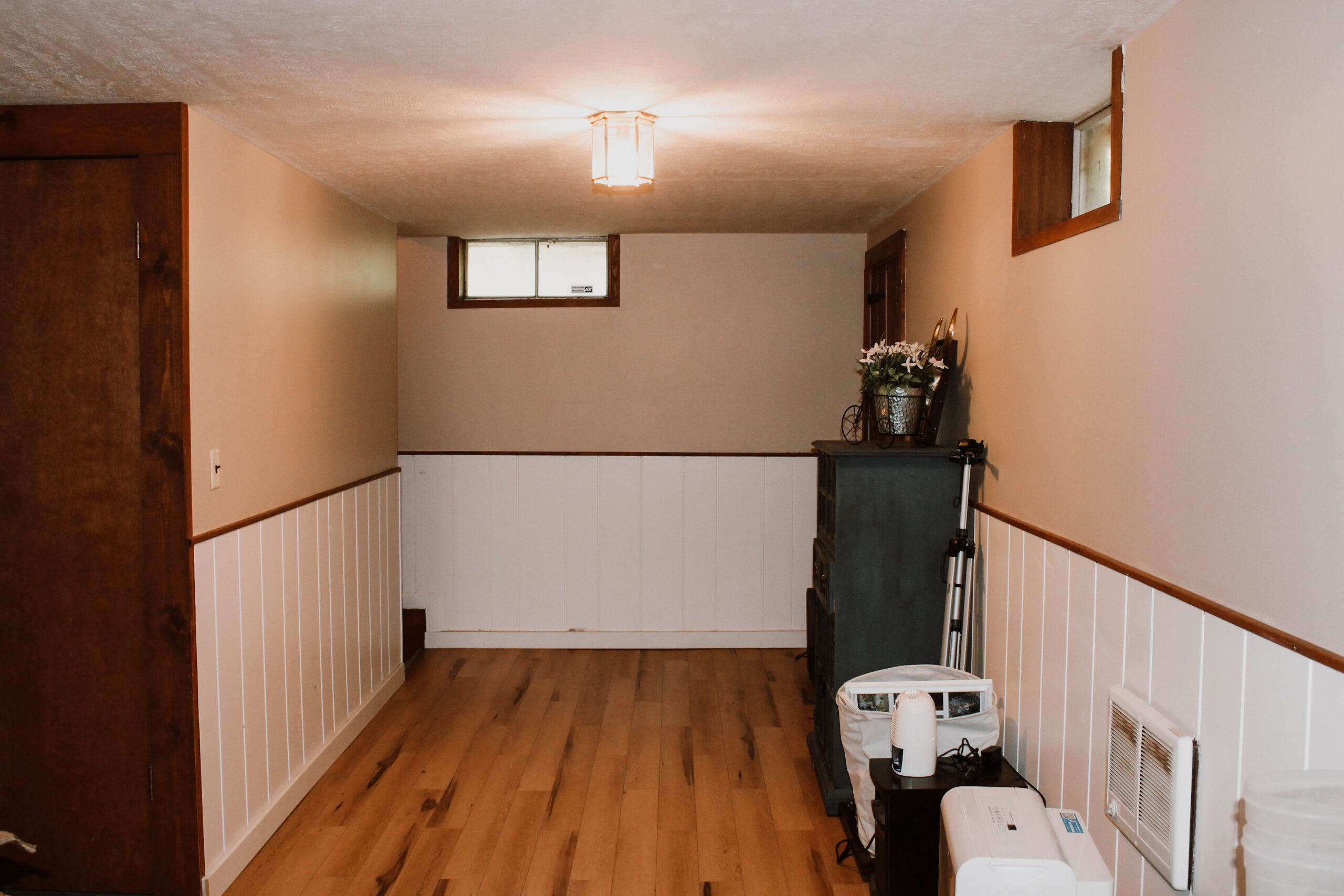
Running a dehumidifier was the most effective step I took. In fact, my basement is large enough that I use two: one at each end of the space.
A single unit helped, but it needed to be dumped so frequently that I knew a second dehumidifier was necessary. (Although I recently found this inexpensive dehumidifier on Amazon that can cover 1,000 square feet. So that may be worth a try for anyone needing to dehumidify a larger basement.)
Running to dehumidifiers allowed me to target separate areas and brought the overall humidity down much faster. And once that humidity came down to normal ranges, the smell almost completely vanished.
The Environmental Protection Agency recommends keeping indoor relative humidity below 60 percent and ideally between 30 and 50 percent. Basements frequently need extra help staying within that range because moisture can seep through foundation materials or develop as warm, humid air meets cool basement surfaces.
The dehumidifiers didn’t eliminate the smell instantly, but after they had been running consistently, the basement began to feel noticeably drier. Over time, the stale odor also became SO MUCH less noticeable.
I Cleaned Hard Surfaces With Diluted Vinegar
Lowering the humidity helped prevent the odor from worsening, but I still needed to remove the smell that had already settled onto the basement’s hard surfaces.
I cleaned the floors and other washable surfaces with a mixture of half water and half white vinegar. The vinegar smell was strong at first, but it dissipated as the basement dried and took much of the musty odor with it.
I Looked for Things Holding Onto the Smell
Even after cleaning the floor, I noticed that some belongings still smelled stale. Cardboard boxes, rugs, upholstered furniture, fabric storage bins, and stacks of paper can all absorb moisture and hold onto basement odors.
I went through the space and removed items that smelled particularly bad or showed signs of moisture damage. Washable fabrics went through the laundry, and anything I kept was allowed to dry thoroughly before being returned to the basement.
Odor Absorbers Can Help With What’s Left
Once the basement was dry and clean, odor absorbers became more useful. Before that, they mostly seemed to cover up the smell temporarily.
Bowls or open containers of baking soda, activated charcoal odor absorbers, and moisture-absorbing products can help with mild lingering odors. However, they are finishing touches, not replacements for dehumidification, cleaning, or correcting a moisture problem.
I also avoid relying heavily on air fresheners. A fragrance might disguise the mustiness for a few hours, but the damp smell usually returns if the source is still present.